
We’ve all been there. You drive to the yard full of grand training plans, only to step out of the car and be hit by a wall of heavy, suffocating summer heat. The air is thick, the flies are out in full force, and the thought of putting on a heavy saddle – let alone working in a hot, dusty arena – feels unfair to both you and your horse.
In my previous post, I talked about why horse riding is a high-intensity summer sport and how the combined metabolic strain of heat and hard work can quickly push a horse and rider into dangerous territory.
But a heatwave doesn’t mean your only option is to leave your horse standing in a shaded stable or paddock. If you’re looking for a cool, low-impact way to keep things ticking over, it’s time to rediscover the in-hand walk.
Far from being a “lazy day” option, purposeful groundwork is a brilliant training tool. Here is why you should add the in-hand summer walk to your toolkit, and how to do it safely.
The hidden benefits of the ground-level walk
When the temperature soars, shifting our focus from the saddle to the ground allows us to maintain our horse’s fitness and mental well-being without overloading their cooling systems via:
- Gentle movement and active recovery: Standing still can lead to stiff joints and filled legs. A relaxed walk promotes healthy blood circulation and helps clear metabolic waste without raising the horse’s core temperature or heart rate into the danger zone.
- Sharpening the basics: In-hand walking is an extension of your groundwork. It’s the perfect opportunity to practice subtle communication. Does your horse mirror your pace? Do they stop immediately when you stop, or do they drift past your shoulder? Refining these boundaries on a quiet walk pays massive dividends next time you mount up.
- A “sensory” experience for mental health: Just like us, horses get bored of looking at the same four paddock fences, especially if their turnout is limited. A change of scenery provides valuable mental stimulation, lowering cortisol (stress) levels and keeping them happy.
The in-hand safety protocol
Handling a horse on public lanes or shared bridleways requires just as much safety preparation as riding. Summer comes with its own unique hazards – like sudden swarms of irritating midges and flies, or blinding sun glare for drivers.
Before you head out, tick off this essential safety sequence:
1. Gear up the handler. Protect yourself first.
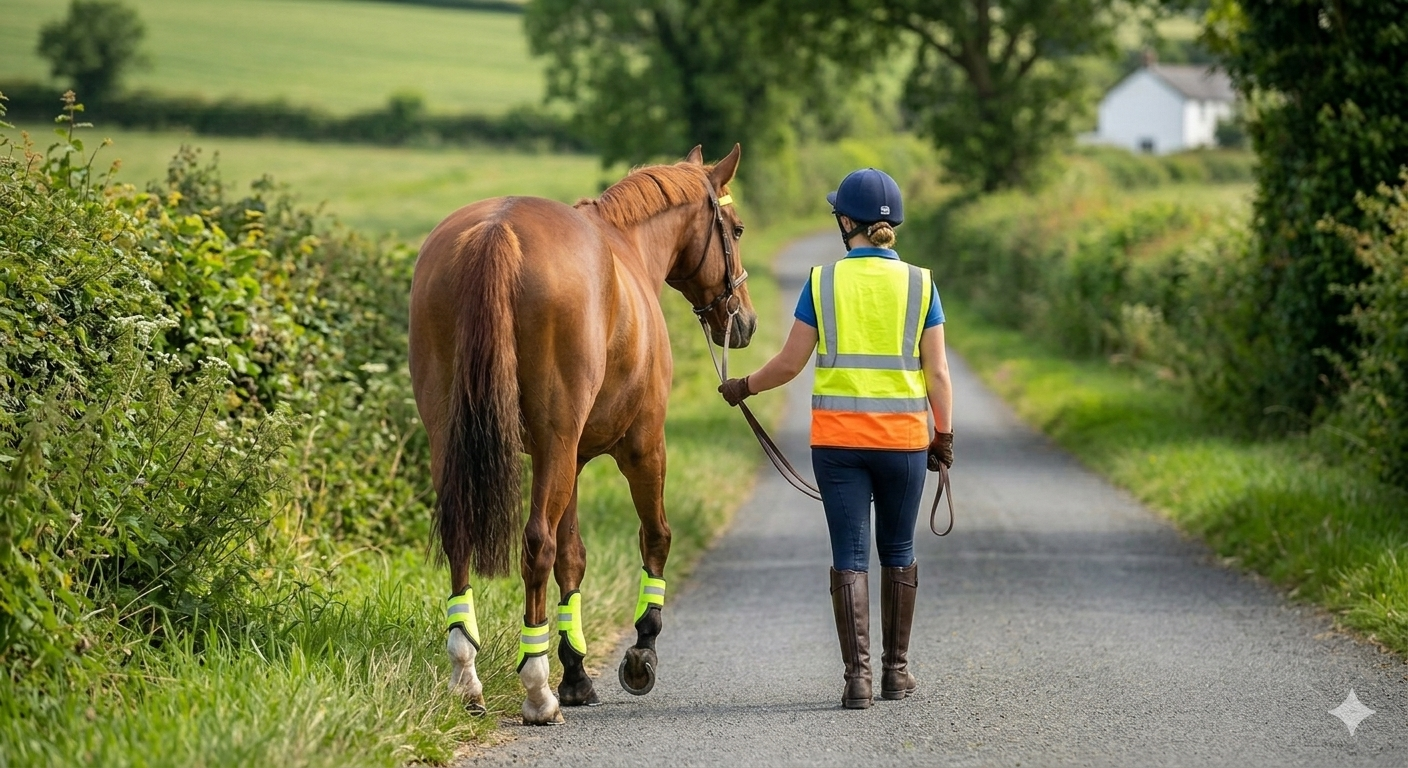
Never head out in trainers or sparse clothing. Always wear sturdy leather boots with a good tread, your riding helmet, and a pair of gloves with a reliable grip. A horse startled by a sudden fly bite can easily step on your foot or pull a lead rope through bare hands.
2. Equip the horse for control. Prioritise control on the road.
A standard webbing stable halter offers very little leverage if a horse startles. The British Horse Society strongly recommends leading in a bridle on public roads to ensure maximum control and keep you both safe.
3. Layer on the hi-vis. Be seen in the shadows.
Don’t let blue skies fool you; summer sun creates deep, blinding shadows on tree-lined country lanes and bridleways. Dress both yourself and your horse in fluorescent, reflective gear to give others vital extra reaction time. (Unsure what gear you need? Check out this guide on the magic of hi-vis).
4.Master your road position. Be the buffer.
When walking on public roads, always position yourself between your horse and passing traffic, keeping the horse on the inside edge of the road or verge. This allows you to guide the horse’s head and control their hindquarters away from vehicles, using your presence as a protective buffer.
Turning a walk into a subtle training session
You can easily weave a few gentle, low-intensity training concepts into your walk to keep your horse engaged:
Practice being the “Calm Anchor”
If your horse encounters something unusual on the trail – a strange dustbin, a flapping tarp, or a barking dog – use it as a confidence-building exercise. Much like the strategies we use when riding in the wind, your job on the ground is to be the calm, predictable anchor. Keep your breathing deep, your shoulders relaxed, and ask for a simple, focused behaviour like a step-back or a yield to redirect their focus.
Spatial awareness and topline engagement
Use the natural terrain and the environment to keep your horse physically and mentally engaged.
- Claiming your bubble. A great in-hand walk requires clear boundaries. Your horse should stay aligned with your shoulder – never overtaking you, crowding your space, or lagging behind. Use the edge of the verge, hedgerows, or fence lines as natural training lanes. Practice transitions within the walk (fast walk to slow walk) and sudden halts to ensure your horse is paying attention to your body language and respecting your personal space bubble.
- Topline engagement. Use the terrain to your advantage. Walking slowly up a gentle incline on the ground encourages the horse to step under themselves and engage their core without the restriction or weight of a rider. Encourage them to stretch their neck long and low to relax their back muscles and flex their spine.
Horsemanship for Every Season
True horsemanship means listening to what our horses need right now and adapting our goals to the environment. Whether it’s the dead of winter or a mid-summer heatwave, there is always a way to progress your bond and your training.
To help you navigate the changing British elements all year round, explore these complete weather management guides below:
🐴 Mastering the elements with your horse
- Summer heat (part 1): Beat the Heat: Why Horse Riding is a High-Intensity Summer Sport
- High winds: Riding in the Wind: 5 Strategies to Become a Calm Anchor
- The changing seasons: Spooky Season and Your Horse
- Winter fitness: Tips for Keeping Your Horse Fit and Active in the Winter