
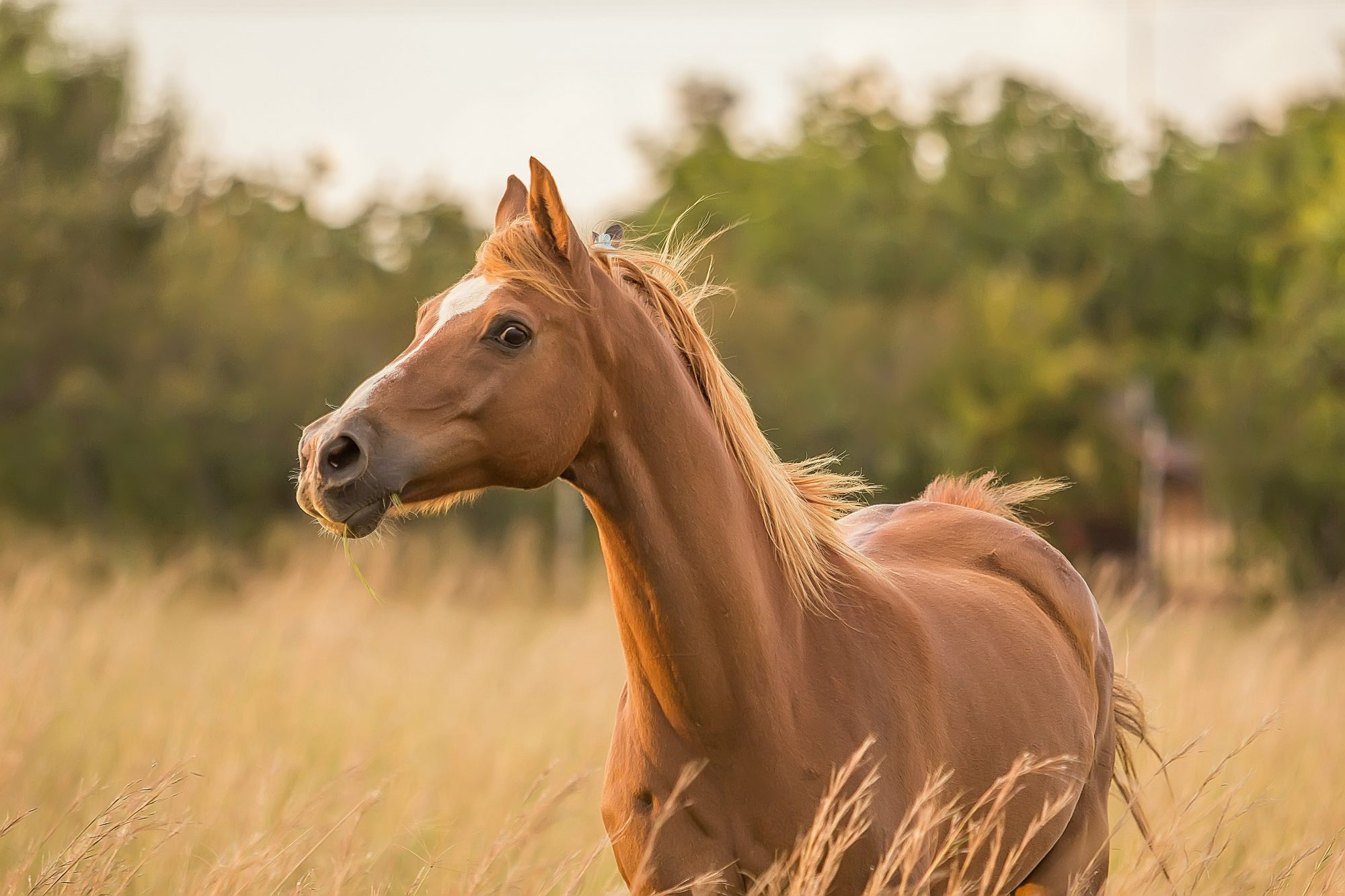
Do you find yourself checking the weather app with a sense of dread? For many equestrians, riding a horse in the wind is a recipe for tension. When the hedges start rustling and the arena mirrors rattle, even the most reliable horse can become a “spooky horse.”
However, your horse’s reaction to the wind is often a reflection of your own fears and concerns. To help you navigate gusty days, here are five coaching strategies to help you stay grounded and become a “calm anchor” for your horse.
Why do horses get spooky in windy weather?
Before we look at the solutions, it helps to understand the “why.” Horses are prey animals, meaning their survival hinges on quickly detecting and reacting to potential threats. The wind creates an environment that screams “danger!” to their highly attuned systems. When they sense your tension on top of that, their flight instinct kicks in.
Sensory overload and constant movement
Horses have highly sensitive vision, specifically evolved to detect even the slightest movement.
The problem: wind creates unpredictable movement everywhere; swaying branches, flapping tarps, or rolling lightweight objects. To a horse, each movement could be a predator about to attack.
The result: the constant, unpredictable motion leads to sensory overload, making horses hyper-alert and prone to spooking at things they’d normally ignore.
Impaired hearing and smell
Horses rely heavily on their acute hearing and sense of smell to identify potential threats and navigate their environment safely.
The problem: the wind itself generates “white noise” that can mask or distort familiar sounds and scents. They struggle to pinpoint where a sound is coming from or clearly identify a familiar smell.
The result: this uncertainty further activates their ‘fight or flight’ instincts. They become hyper-vigilant because their primary warning systems are compromised, making them more likely to react strongly to any unexpected stimulus.
So, what can you do about it?
5 Mindset tips for riding in the wind
1. Control your breath
When we get nervous, we tend to tense up and take faster, shallower breaths. Or hold our breath completely. This tells the horse there is something to worry about!
- The Strategy: Focus on a “low and slow” breath. Imagine breathing right down into your stirrups. This physically lowers your centre of gravity and signals to your horse that all is well.
2. Focus on “active” riding
If you sit like a passenger waiting for a spook, it will happen. Instead, give your horse a job to do.
- The strategy: Use your flatwork skills. Focus on active transitions, leg yields, or changes of rein. If their brain is busy following your aids, they have less “bandwidth” to worry about the wind.
3. Soften your visual focus
When we are anxious, we tend to “target lock” on the scary corner or the moving hedge.
- The strategy: Use “soft eyes.” Broaden your peripheral vision to take in the whole horizon. This prevents your body from bracing and allows you to move with the horse rather than against them.
4. Create a “bubble of calm”
Imagine a 2-metre bubble around you and your horse. Everything inside that bubble is your domain; everything outside (the wind, the noise) is irrelevant.
- The strategy: If your horse spooks, don’t focus on the “scary thing.” Acknowledge it, but immediately bring their focus back inside the bubble to your leg and hand.
5. Know when to call it
A “Calm Anchor” also knows when the conditions are unsafe.
- The strategy: If the wind is truly dangerous or you feel your anxiety rising past the point of productivity, it is okay to get off or stay in the barn. True confidence comes from making empowered choices, not just “surviving” a scary ride.
Conclusion: practice brings improvement
A windy day is genuinely challenging for your horse’s mind, and riding in the wind is a skill to be honed. However, the more you practice these mindset shifts, the more prepared you will be when a gale blows in.
By becoming a calm anchor, you provide the leadership your horse needs to feel safe.
Ready to build your confidence in the saddle? As a qualified coach, I specialise in helping riders build technical expertise and confidence in the saddle. Whether you want to improve in a specific discipline, or need help working with a spooky horse, I’m here to support.
Explore my Coaching Services | Get in touch for a session
If you enjoyed this and would like to read some more, check out Are you ready for spooky season?