
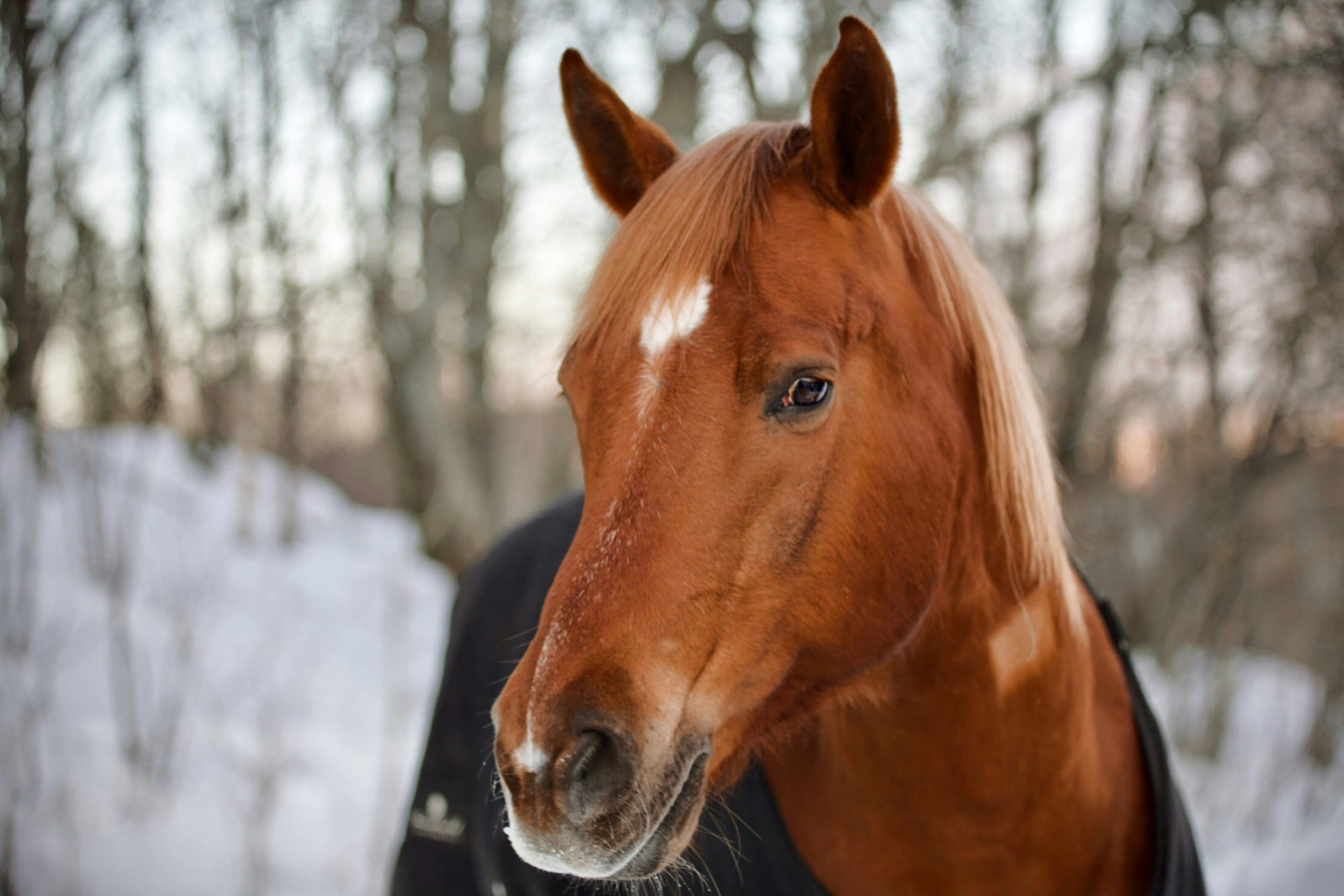
With rugging season set to continue for a while longer, it’s the perfect time for a quick safety check. We’ve all seen it… a rug slipped halfway down a shoulder, or leg straps dangling dangerously close to hocks. Rugs are put on with the best of intentions – we just want our horses to be comfortable in the elements – but the truth is, a poorly fitted rug can often be more of a hazard than the weather itself.
I’m writing this because I’m passionate about ensuring horses are kept safe and comfortable, yet even with so much information at our fingertips, rugging errors are still a common sight, leading to avoidable injuries and ruined gear. Let’s make the remaining cold months the season of ‘rub-free’ shoulders and secure straps with a quick refresher on the essentials.
1. Why fit matters
It’s not just about aesthetics. A poorly fitted rug brings risks:
- Injury: Loose straps are a major risk. If a horse gets a foot caught while rolling or scratching, the resulting panic can cause tendon injuries or fractures.
- Pressure & rubs: A rug that is too tight at the chest or too short in the neck “clamps” the wither and shoulders, leading to hair loss, sores, and restricted movement.
- Thermal stress: If a rug is too big, it shifts, allowing heat to escape and rain to seep in, defeating the purpose of the rug entirely. If it’s too tight, heat is trapped, sweat can’t evaporate and the horse cannot regulate its temperature.
2. Measuring for length and depth
Before you buy, you need two key dimensions:
Length
Measure from the centre of the chest, along the side of the body, to the point of the buttock. If your horse falls between sizes, it’s usually better to go up an inch rather than down, provided the neck opening isn’t too large.
Depth (the “skirt”)
The rug should cover the belly but not hang so low that it looks like a dress. Too deep and the horse might step on the fabric when getting up from a roll. Too shallow and the sensitive belly area will be exposed to wind-chill and rain splashback.
3. The golden rules of strap adjustment
The chest
You should be able to slide a flat hand down the front of the rug at the shoulder. If you have to struggle to get your hand in, it will rub your horse. If you can fit a whole arm in, the rug will likely slip back behind the wither. You should also be able to slide your hand in at the chest with no restriction.
Belly surcingles
These should always be crossed under the belly. This creates a “cradle” that keeps the rug centred. There should be a hand’s width (approx. 4 inches) between the strap and the horse’s belly. Too tight and it’s uncomfortable when they lie down; too loose and a leg can get caught.
Leg straps vs. fillet strings
This can be a point of confusion.
- Leg straps are found on most turnout rugs. Pass one strap around a back leg, and clip it to the D-ring on the same side. Then pass the other strap around the other back leg, passing the second strap through the first before clipping it to the other D-ring. This “interlocking” keeps the rug from flipping in high winds. Leg straps should be adjusted so there is one hand-width between the strap and the thigh.
- Fillet strings are found on stable rugs or coolers. This is a single string that passes under the tail. Fillet string fastenings aren’t suitable for turnout as they offer zero protection against the wind lifting the rug up and potentially causing it to come loose.
4. The final check
Once the rug is on, look at the fit and also watch your horse move in it.
- Does the fabric “pull” across the point of the shoulder?
- Does the rug sit too far back (behind the wither) or too far forward (choking the neck)?
- Can you see a significant amount of belly (indicating the rug is too shallow)?
- When the horse drops its head to graze, does the neck opening tighten?
If you checked ‘yes’ to any of these, the rug is not a correct fit.
The “Rug Fit” troubleshooting checklist
If you notice any of the following “symptoms”, here is how to address them:
Symptom: Bald patches or “scruffy” hair on the shoulders.
- The cause: The rug is too tight across the chest or the neck opening is too small.
- The fix: Loosen the chest straps or look for a rug with shoulder gussets (extra fabric pleats) to allow for more movement. If the rug is already at its loosest, you may need a “chest expander” or a larger size.
Symptom: The rug is slipping to one side constantly.
- The cause: Usually unevenly adjusted leg straps or the rug is too large for the horse’s frame.
- The fix: Ensure leg straps are looped through each other and adjusted to the same length. Check if the “drop” (depth) is too long for the horse, causing the weight of the water/mud to pull it down.
Symptom: The rug is sitting “behind” the wither.
- The cause: The neck opening is too large.
- The fix: Tighten the chest straps to pull the rug forward. If it still slips back, the horse likely needs a “high neck” or “wither relief” cut rug. Danger: A rug behind the wither can “lock” the shoulders and cause significant pain.
Symptom: Manure on the back/inside of the rug.
- The cause: The rug is too long or the tail flap is too low.
- The fix: Check your measurement from chest to buttock. If there is more than 2–3 inches of “overhang” past the dock, the rug is too large and will likely interfere with the horse’s natural functions.
Symptom: The horse has “scald” or wet patches under the rug.
- The cause: The rug is either not breathable (causing sweating) or no longer waterproof (allowing rain in).
- The fix:
- If it’s sweat, check that the fit isn’t too tight first, as restricted airflow makes things worse. If the fit is fine, switch to a lower “fill” (e.g., move from a 200g to a 100g).
- If it’s rain and the horse isn’t sweating but is damp from the outside in, the rug needs re-proofing or replacing.
Symptom: Leg straps are hitting the horse’s hocks.
- The cause: Straps are too loose.
- The fix: Shorten them until you can only fit one hand-width between the strap and the horse’s inner thigh. If they are still too long, they may need to be replaced with shorter straps.
The “Safe Horse” quick-check (before you leave the field)
- [ ] Hand test: Can I fit my hand at the chest?
- [ ] Wither test: Is there clearance at the top of the neck?
- [ ] The “cross”: Are belly and leg straps crossed and secure?
- [ ] The “gap”: Are the straps snug enough that a hoof can’t get through?
Fitting a rug correctly is one of those small tasks that makes a massive difference to your horse’s daily well-being. I hope this checklist makes your daily yard routine just a little bit easier!
If you found this useful, please feel free to share the link with your barn family or on social media. Let’s help make ‘shoulder rubs’ a thing of the past.
Happy riding!